



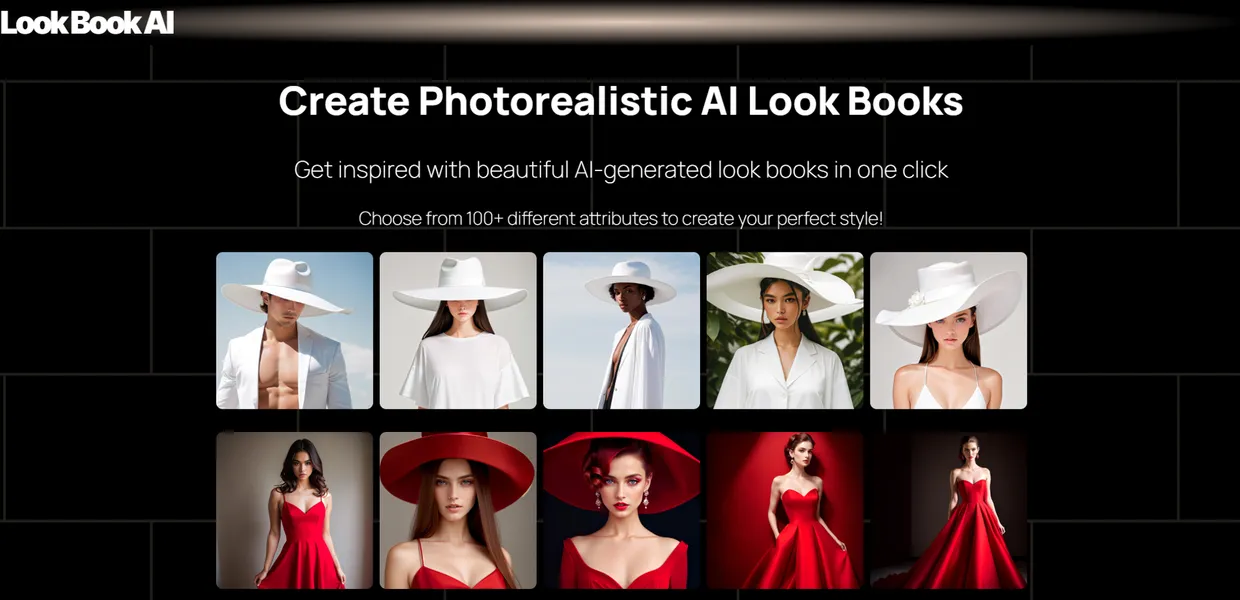
What is LookBook AI?
E-commerce brands spend an average of $500 to $2,000 per day on physical fashion photoshoots. LookBook AI replaces these traditional studio sessions with an AI-powered fashion photography platform.
Developed by LookBook AI, Inc., this tool generates high-fidelity model images and virtual try-ons for mid-market and enterprise apparel brands. It eliminates the need to hire physical models or rent studio space.
- Primary Use Case: Generating high-resolution fashion lookbooks and virtual try-ons without physical photoshoots.
- Ideal For: Enterprise e-commerce brands and high-volume fashion retailers.
- Pricing: Custom pricing (Enterprise model) requires contacting sales for a quote.
Key Features and How LookBook AI Works
Model Customization and Posing
- AI Model Customization: Adjust ethnicity, age, and body shape across 15 specific parameters.
- Pose Selection: Choose from a curated library of 50 professional fashion industry poses.
Virtual Try-On and Batch Processing
- Virtual Try-On: Map 2D clothing images onto 3D AI models using physics-based draping algorithms.
- Batch Generation: Process up to 30 garments simultaneously in a single photoshoot session.
Output Quality and Integration
- High-Resolution Output: Export images in 300 DPI for print marketing materials.
- API Access: Connect image generation directly to existing PIM or ERP systems via RESTful API.
LookBook AI Pros and Cons
Pros
- Reduces photography overhead by eliminating physical studios and equipment rentals.
- Generates professional product imagery in under 24 hours.
- Promotes brand inclusivity through a diverse library of AI models representing various demographics.
- Maintains visual consistency across entire product collections.
Cons
- Produces occasional uncanny valley artifacts in complex hand or finger positions.
- Struggles to accurately render complex fabric textures like sheer lace or high-shine sequins.
- Lacks a transparent self-service tier, making it inaccessible for small independent designers.
- Requires high-quality flat-lay or ghost mannequin source images for accurate results.
Who Should Use LookBook AI?
- Enterprise E-commerce Brands: High-volume retailers can process 30 garments per batch to update catalogs quickly.
- Fashion Marketing Teams: Marketers can A/B test different model appearances for the same garment to optimize conversion rates.
- Independent Designers: Solo creators on a budget will find the custom enterprise pricing prohibitive.
LookBook AI Pricing and Plans
LookBook AI operates entirely on a custom enterprise pricing model.
The company does not offer a free trial or a self-service subscription tier. The base enterprise package includes 30 HD photoshoots, realistic human models, and virtual try-on features. Interested users must contact the sales team to receive a specific quote based on their projected image volume.
This opaque pricing structure creates friction for smaller teams (you will need to sit through a sales call to get a baseline cost).
How LookBook AI Compares to Alternatives
Similar to ZMO.ai, LookBook AI allows users to place digital garments on realistic lifestyle backgrounds. ZMO.ai provides transparent pricing tiers starting at $59 per month, making it accessible to smaller brands. LookBook AI targets enterprise clients with custom API integrations for existing PIM systems.
Unlike Veesual, which focuses heavily on mix-and-match styling experiences for shoppers, LookBook AI prioritizes high-resolution 300 DPI output for print and digital marketing. Veesual offers an interactive widget for product pages. LookBook AI serves as a backend content creation engine.
The Final Verdict for E-commerce Brands
LookBook AI delivers high-quality virtual try-on images for large fashion retailers.
If you manage a high-volume catalog and need diverse models, choose LookBook AI. If you run a small boutique on a tight budget, look elsewhere. Consider Botika or ZMO.ai for affordable, self-service fashion image generation.